


Mould grows where moisture stays. Find the moisture, and you find the mould.
In most homes, mould is caused by a moisture problem: a leak, condensation on a cold surface, poor ventilation, or water damage that was never fully dried. Health Canada says that unless the cause of the moisture is identified and solved, mould will reappear. Cleaning or painting over it treats the surface, not the source. This guide shows you how to find the moisture, what to check first, and when to bring in a professional.
Quick self-check: how many of these are true in your home?
Tick the ones that apply. This is a general check, not an inspection.
What causes mould in a house?
Mould needs moisture, and moisture reaches a home in several ways. Health Canada lists these moisture sources:
- Leaks from plumbing, the roof, or cracks in the foundation, floor, walls or windows.
- Water coming in from outside, such as snowmelt, storm surges or heavy rain.
- Condensation on cold surfaces such as windows and pipes.
- Daily activities, such as showering, cooking and washing clothes, especially when exhaust fans are not working or do not vent outside.
- Overcrowding, because breathing, bathing and cooking all add moisture to the air.
- Inadequate ventilation, so moisture cannot leave the home.
- Indoor cannabis cultivation, which Health Canada also lists as a moisture source.
Once building materials such as drywall, wood, paper and textiles become damp or wet, they can support mould. That is why the source matters more than the surface.
How moisture turns into mould
Diagram of the sources Health Canada lists. Lines show the route, not how often each source happens.
Source: Health Canada, Addressing moisture and mould in your home (January 2023), moisture sources and materials list.

Condensation: the quiet one
Warm indoor air holds moisture. When it touches a cold window, an exterior wall or the back of a cabinet, the moisture turns to water. That is why mould often appears in corners, along the bottom of exterior walls, and on window frames in winter.
Health Canada recommends keeping relative humidity between 30% and 50%. It also recommends a portable dehumidifier in damp areas such as basements, especially if you see condensation on cold surfaces or the humidity is above 50%. Empty the drain pan regularly, or set the unit to drain.
Ventilation and everyday moisture
Showers, cooking, laundry and houseplants each add a small amount of moisture. Together, they can keep a home damp. Health Canada recommends exhaust fans in kitchens and bathrooms, more ventilation, and air conditioning where it helps to reduce moisture levels.
An exhaust fan only helps if it works and vents outside. A fan that vents into the attic, or one that is never switched on, does little for a bathroom ceiling.
Where to look, and what it can mean
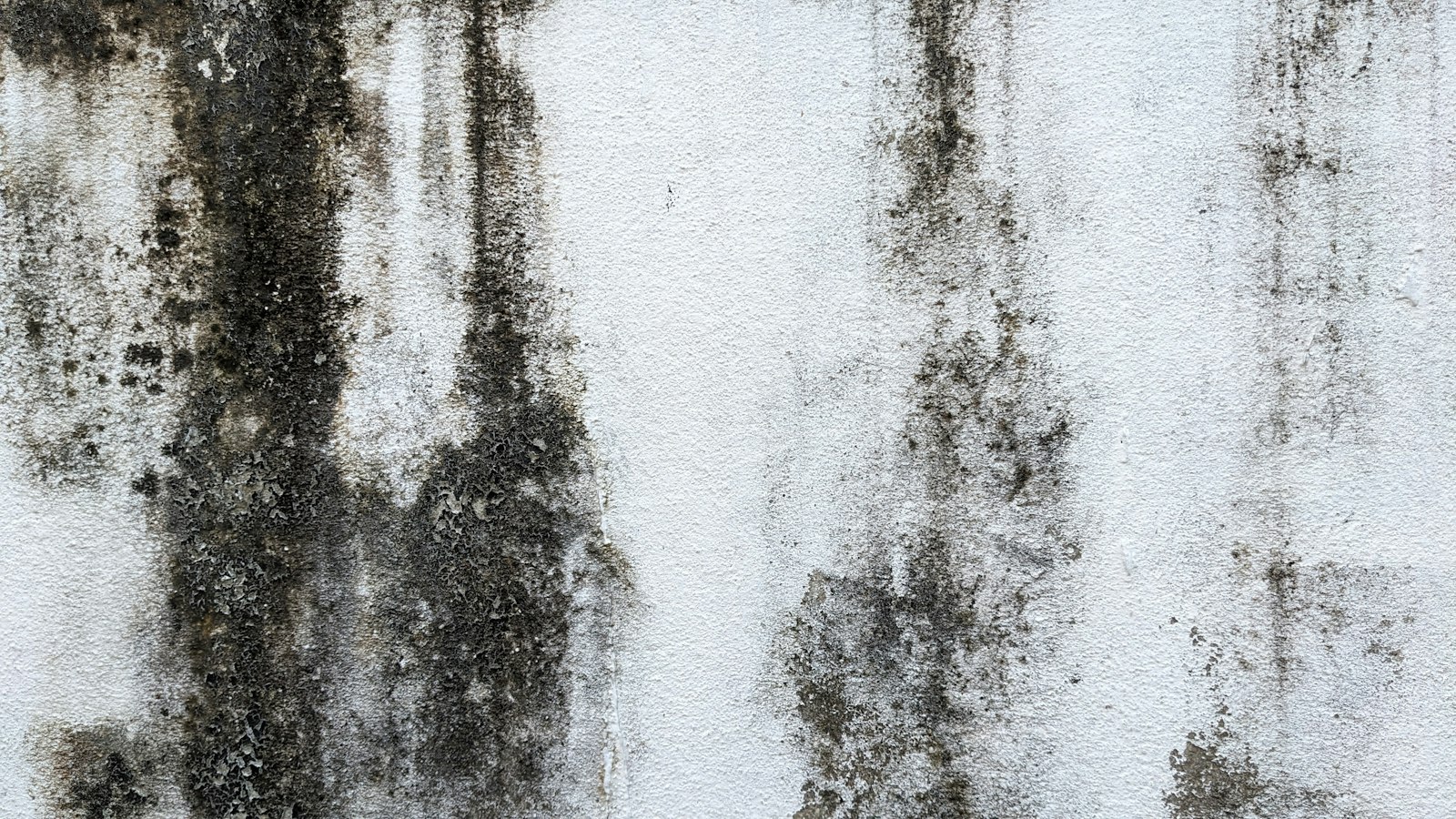
Health Canada recommends a visual walk-through of every room, plus attics, basements, crawl spaces and storage areas. Look for stains or discolouration on floors, walls, window panes, ceiling tiles, fabrics and carpets. Other signs of excessive moisture include peeling paint, wrinkled wallpaper, cracks in plaster, warped wood, and white powdery salt crystals on masonry.
Where mould shows up, and what it often points to
A pattern guide to help you narrow the search
| Where you see it | What it often points to |
|---|---|
| Ceiling stains, or mould in a top-floor room | A roof, flashing or attic leak, or poor attic ventilation |
| Dark growth on the bottom of exterior walls | Water coming in from outside, or poor drainage around the foundation |
| Mould on window frames and sills every winter | Condensation from high indoor humidity or poor airflow |
| Mould around the tub, ceiling or grout | Steam with no working exhaust fan, or a failed seal |
| Musty basement corners and stored boxes | Humidity and cold walls with little airflow |
| Mould around pipes or under sinks | A plumbing leak, even a slow one |
Pattern guide based on the moisture sources and signs listed in Health Canada, Addressing moisture and mould in your home (January 2023). It is a starting point, not a diagnosis.
How to tell if the moisture is still active
A stain can be old. A damp patch is more urgent. Before you decide what to do, check whether the moisture is still moving. Health Canada suggests a simple sequence: look for signs of excessive moisture, check for obvious leaks, condensation or flooding, and note any musty or earthy odour.
- Check after rain or snowmelt. If the wall, floor or ceiling is damp after a storm or a thaw, water is probably coming in from outside.
- Check after a shower or cooking. If a room stays damp for hours without a fan on, the ventilation is not clearing the air.
- Check the cold surfaces. Windows, pipes and exterior walls that show condensation in the morning are collecting moisture from indoor air.
- Check the stain edges. A stain that grows, darkens or changes shape after a few days is still wet.
If the moisture is still active, fix that first. Cleaning a surface that keeps getting wet only resets the clock.
Mould you cannot see
Mould can grow behind walls, above ceiling tiles, under flooring and inside cabinets. Health Canada says it can be hidden, so check any damp area, and especially any place where water damage is known to have occurred.
A strong musty smell with no visible sign of mould or water damage is a reason to look harder. Health Canada advises consulting a professional about hidden mould inside walls and ceiling or floor cavities when the smell is strong and nothing is visible.
Why mould keeps coming back
Scrubbing or painting over mould treats the symptom. If the moisture is still active, or the growth is inside a wall, under flooring or behind cabinets, it returns. Health Canada is direct about this: unless the cause of the moisture problem has been identified and solved, mould will reappear.
That means the lasting fix starts with finding where the moisture comes from, stopping it, and drying the materials properly.
Myths that keep mould around
Myth
“A fresh coat of paint will stop it.”
Fact
Health Canada says the moisture must be fixed first. Paint covers the growth, and the mould returns when the moisture does.
Myth
“If I cannot smell it, it is gone.”
Fact
Mould can grow inside walls and under floors. A musty smell is a sign to look harder, even when nothing is visible.
If you go looking: protect yourself
Health Canada recommends wearing personal protective equipment while you identify and evaluate mould, and during any cleanup. The minimum it lists is safety glasses or goggles, a disposable well-fitting N95 respirator, and household disposable gloves. Check that the label says “N95”. Dust masks are not suitable for mould.
Keep anyone at higher risk out of the area. Health Canada names infants, children, seniors, pregnant people and people with respiratory conditions such as asthma.
Before you clean: a 5-minute photo checklist
Tick each one as you go. The progress is saved in this browser only.
0 of 5 done
Want someone to find where the moisture is coming from?
Book a site visit. We look at the source first, then give you a written scope before any work starts.
When to call a professional
Health Canada advises professional help when the moisture source or the corrective action is unclear, when the problem is large, or when mould comes back after cleaning. Call one if you suspect hidden growth behind walls, under floors or above ceilings.
Questions people ask
Is mould always caused by a leak?
Not always. Health Canada lists leaks, condensation, daily moisture, poor ventilation and outside water as sources. Condensation and poor ventilation can cause mould without any leak.
Can humidity alone cause mould?
Yes. Mould needs moisture, and humidity above what the materials can handle over time can support it. Health Canada recommends keeping relative humidity between 30% and 50%.
Why is mould worse in winter?
Cold windows and exterior walls collect condensation more easily. Keeping windows closed and running humidifiers can also hold moisture inside the home.
How fast does mould start?
Health Canada says mould will begin to grow in an area with excessive moisture within 48 hours. That is why quick action matters.
Is it safe to stay in a house with mould?
Health Canada says some people are at greater risk, including infants, children, seniors, pregnant people and people with respiratory conditions such as asthma. Anyone with ongoing symptoms should see a doctor. Keep the affected area closed off until it is assessed.
Should I use bleach?
No. Health Canada says not to use bleach to clean up mould. Use an unscented soap solution on washable surfaces.
Sources
- Health Canada, Addressing moisture and mould in your home (January 2023). Used for the moisture sources, the 30% to 50% humidity guidance, the visual inspection signs, the 48-hour growth point, the PPE minimum, the at-risk groups and the bleach advice.
Related services
Related guides
Keep reading: How mould grows in a house · Mould remediation in Toronto and the GTA · Knowledge hub