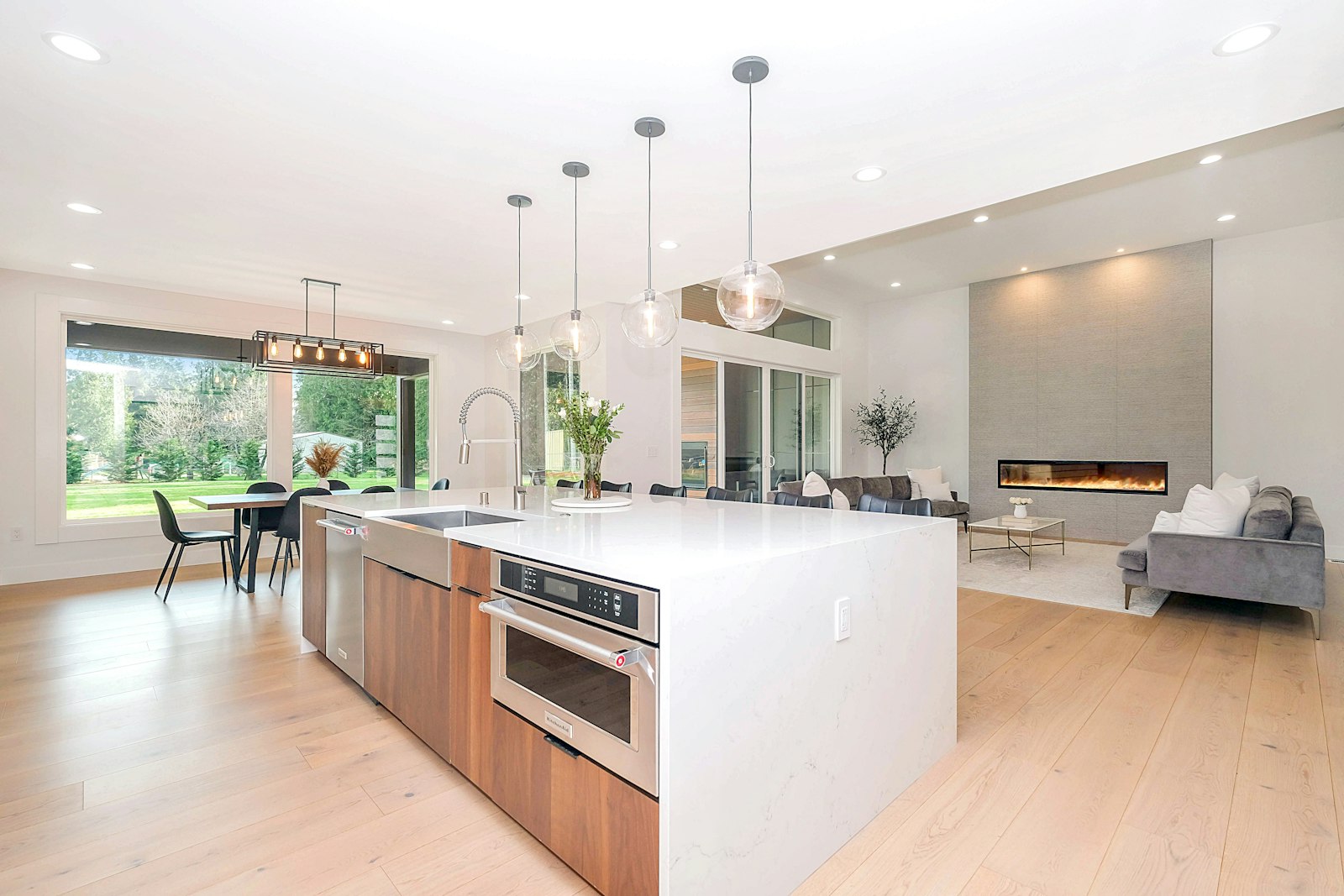

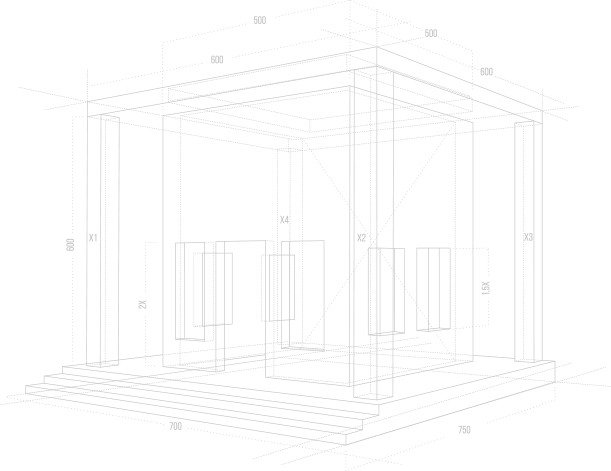
How this guide works
Flooring is about eight decisions, made in order. The subfloor and the room use come first, because they decide which floor is right. Each decision shows the options, what each one does, and the pick we make when you ask us.
Decision 1
How the room is used
Traffic, water, pets and sunlight decide which floor will last. A quiet bedroom and a busy entry need different answers.
| Room | Heavy use or water | Best fit |
|---|---|---|
| Entry and kitchen | Heavy traffic, spills, grit | Porcelain tile, luxury vinyl plank, engineered hardwood |
| Living and dining | Moderate traffic, furniture, pets | Solid or engineered hardwood, luxury vinyl plank |
| Bedrooms | Light traffic, comfort underfoot | Hardwood, engineered wood, carpet if you want softness |
| Basement | Moisture risk, cold concrete | Luxury vinyl plank, porcelain tile, engineered wood with a moisture barrier |
| Bathroom | Water and steam | Porcelain tile or luxury vinyl plank with waterproof installation |
Decision 2
The subfloor: check it before any floor is chosen
Every floor sits on the subfloor. An uneven or damp subfloor causes gaps, squeaks, cracked tile and early failure, and no floor covering fixes that. The check comes before the choice.
| What we check | Why it matters | What fixes it |
|---|---|---|
| Flatness | Typical floor tolerance is about 3 mm over 3 m. Dips make hard floors crack or squeak | Levelling compound or sanding high spots |
| Moisture | Concrete and wood subfloors must be dry enough for the floor you choose | Moisture testing, a vapour barrier, drying time |
| Structure | Joists must be solid and not bouncy, especially for tile | Blocking, sistering joists, a new subfloor layer |
| Height | Thresholds and door clearance change with each new layer | Plan the layer heights before ordering |
Decision 3
Choose the floor type
Each floor type trades durability, water resistance, look and install effort. Use the table to narrow the choice to two or three options.

| Type | Water resistance | Durability and repair | Look |
|---|---|---|---|
| Solid hardwood | Low; sensitive to moisture | Can be sanded and refinished several times | Warm, natural, classic |
| Engineered hardwood | Moderate; stable over changing humidity | Top layer can be refinished, fewer times than solid | Same look as solid, more stable |
| Luxury vinyl plank (LVP) | High; waterproof core | Scratches can be hard to repair, but the surface is durable | Realistic wood and stone looks |
| Porcelain tile | Very high | Very durable; grout needs care | Clean, modern, wide range of looks |
| Laminate | Low to moderate | Repairable only in limited ways | Budget look, limited options |
| Carpet | Low | Stains and wears; can be replaced in sections | Soft and warm underfoot |
Decision 4
Species, colour and finish
For wood floors, the species sets the grain and hardness, and the finish sets the sheen and how it wears. For vinyl and tile, the decision is the look and the texture.
| Option | What it looks like | Note |
|---|---|---|
| White oak | Light, consistent grain, the most common modern choice | Hard and stable; takes stain well |
| Red oak | Warmer tones, strong grain | Shows more grain character |
| Hickory | Varied grain and colour, rustic | Very hard; busy look |
| Maple | Light, fine grain, smooth | Hard, but shows dents more |
| Walnut | Dark, rich brown | Softer; shows scratches more easily |
| Matte oil finish | Natural, low sheen, easy to spot-repair | Needs periodic re-oiling |
| Factory-applied aluminium-oxide finish | Durable, consistent, coated surface | Harder to refinish once worn |
Decision 5
Plank width, length and layout pattern
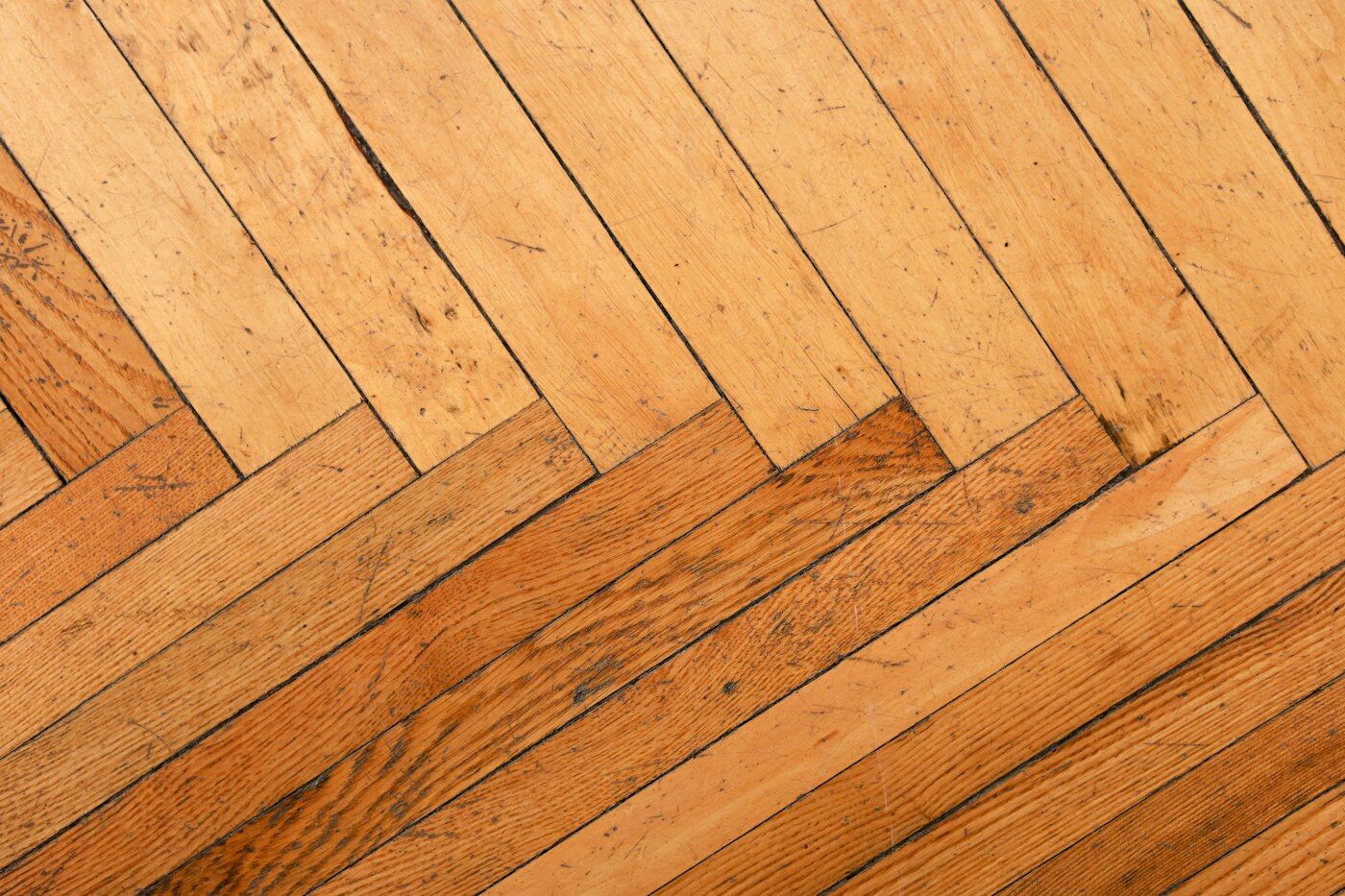
Width and layout change the feel of a room. Wide planks feel modern and open. Narrow planks feel traditional. Pattern can turn a floor into a feature.
| Layout | Effect | Good for |
|---|---|---|
| Straight lay, wide planks | Modern, calm, makes a room feel bigger | Open-plan living spaces |
| Straight lay, narrow planks | Traditional, busy but classic | Older homes and character rooms |
| Herringbone | Strong pattern, a feature floor | Entries, dining rooms, a single feature area |
| Chevron | Formal, directional, more cutting and waste | Statement rooms; allow extra material |
Decision 6
Underlay, moisture barrier and sound
The layer under the floor affects comfort, sound, moisture and warranty. Many warranties require a specific underlay, so check before ordering.
| Layer | What it does | When it matters |
|---|---|---|
| Foam or cork underlay | Cushion, sound reduction, light moisture control | Upper floors and quiet bedrooms |
| Vapour or moisture barrier | Stops moisture from concrete reaching the floor | Basements, slab-on-grade and wet rooms |
| Acoustic underlay | Reduces impact noise between floors | Condos, multi-level homes |
| Radiant-heat rated underlay | Lets heat pass through evenly | Heated floors |
Decision 7
Installation method
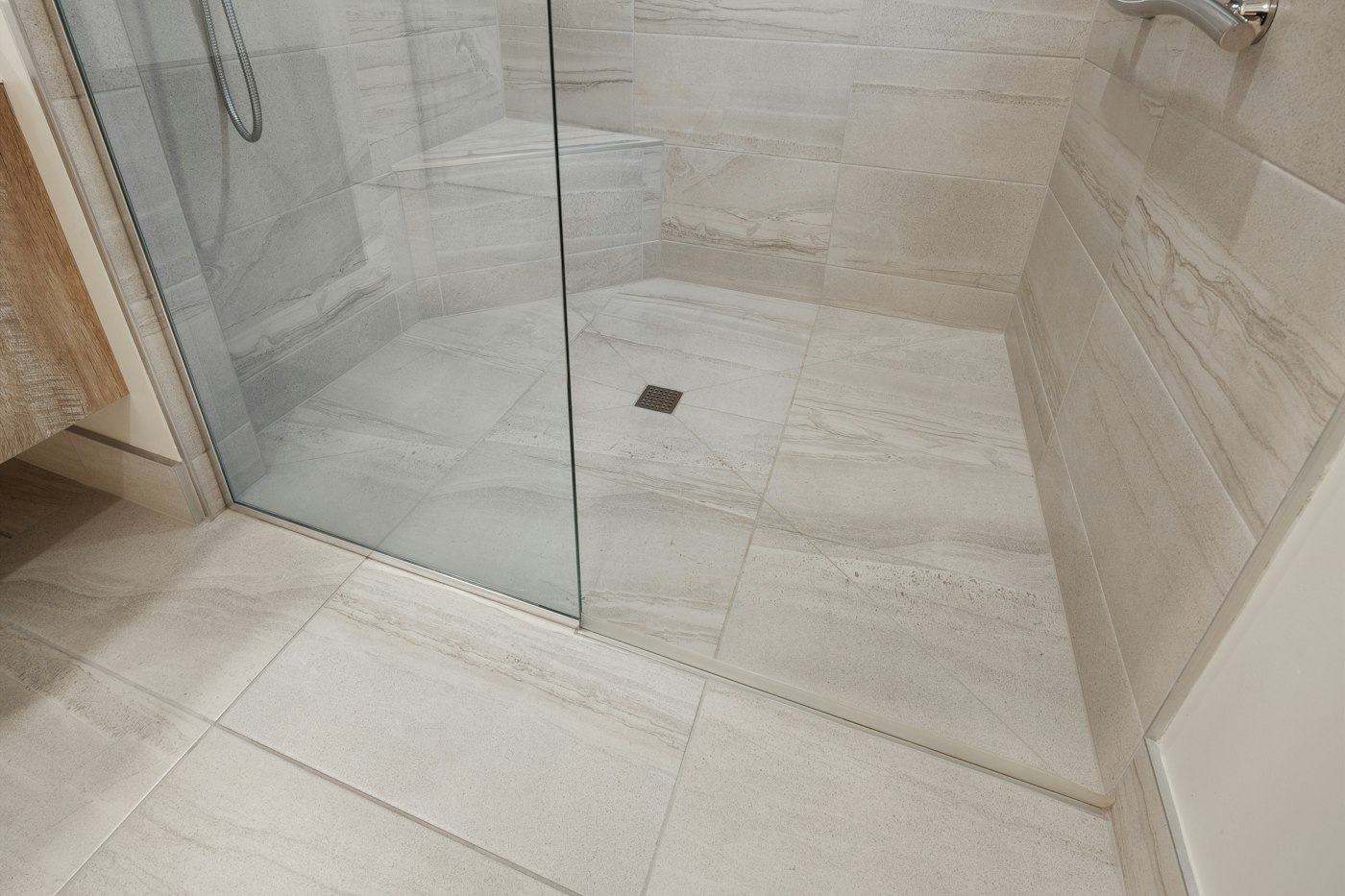
How the floor is fixed to the subfloor affects the install time, the repairs later and whether the floor can be removed.
| Method | How it works | Pros and limits |
|---|---|---|
| Floating | Planks click together, not fixed to the subfloor | Fast, reversible; can feel hollow if poorly laid |
| Glue-down | Adhered to the subfloor | Solid, quiet; harder to remove later |
| Nail-down | Solid hardwood nailed to plywood or joists | Traditional; needs a solid subfloor |
| Thin-set tile | Tile bonded with mortar and grout | Strongest for wet areas; longest install |
Decision 8
Transitions, baseboards and stair nosing
The finish details decide how the floor meets the rest of the house. They are cheap to decide now and expensive to change after install.
| Detail | What it does | Decide |
|---|---|---|
| Transition strips | Join two floors at doorways | Match the metal or wood to the trim finish |
| Baseboards | Hide the gap at the wall | Height and profile fit the room style |
| Quarter-round or shoe moulding | Covers the expansion gap | Paint or stain to match |
| Stair nosing | Protects the stair edge | Match stair treads and risers |
Decision 9
Care, warranty and maintenance
Every floor needs a care plan. The warranty and the cleaning method are part of the choice, not an afterthought.
| Floor | Routine care | Watch for |
|---|---|---|
| Hardwood | Dry sweep, damp mop with a wood-safe cleaner | Standing water, heavy furniture without pads |
| LVP | Sweep and damp mop | Sharp objects and direct sunlight fading |
| Porcelain tile | Sweep, mop; seal grout if specified | Grout staining and loose grout |
| Carpet | Vacuum regularly, professional cleaning | Stains and worn traffic lanes |
Decision 10
Sequence and timing
Flooring goes near the end of a renovation, after drywall and paint, and before trim and fixtures. Long lead items are ordered early.
| Step | What happens | Typical time |
|---|---|---|
| Subfloor fixes and checks | Levelling, moisture, structure | 3 to 10 days |
| Acclimation of materials | Wood and LVP acclimate in the room | Several days, per manufacturer |
| Install | Underlay, floor, transitions | 2 to 10 days, depending on area and pattern |
| Trim and finish | Baseboards, quarter-round, nosing | 1 to 3 days |