


Mould often grows where you cannot see it: behind walls, under flooring and in the ceiling. An inspection finds it before the repair is planned.
Inspections in Toronto focus on the problems that restoration work starts from: mould, moisture and air quality. We test where the signs point, record what we find, and write the results into the scope, so the repair is planned on evidence rather than guesswork. This guide covers the signs to watch for, what an inspection checks, how results are used, when to call, and what an insurance file needs.
Key takeaways
- Mould can grow behind walls, under flooring and in ceilings, where it is not visible.
- Mould can begin within 24 to 48 hours on materials that are not dried (University of Toronto Environmental Health and Safety).
- Health Canada recommends keeping indoor relative humidity between 30 and 50 per cent to limit mould growth.
- An inspection finds the moisture source as well as the growth. Cleaning without fixing the source is a common reason mould returns.
- Results are written up with photos and readings, so the restoration scope rests on evidence.
- If people in the home have symptoms that improve when they leave, tell the inspector and see a doctor.
1. Is there a musty smell, staining or peeling paint?
2. Has there been a leak, flood or condensation problem?
3. Are people in the home having symptoms that improve when they leave?
Table of contents
- How an inspection is run with us
- What are the signs of mould or moisture in a Toronto home?
- What does a mould and moisture inspection check?
- Why does mould grow behind walls and under floors?
- Is indoor air quality testing worth doing?
- What humidity level should my home be kept at?
- How are inspection results used in a restoration?
- What should I do before the inspection?
- Myths about mould inspections
- What does an insurance file need from an inspection?
- What does an inspection cost, and what does it include?
- When should I book a mould inspection in Toronto?
- Frequently asked questions
- Sources
- Related services and guides
How an inspection is run with us
Every inspection follows a fixed sequence, so the findings are complete, consistent and easy to act on. The visit is planned around the signs you describe, the areas are checked in order, and the report is written before any repair is quoted.
- Booking and background. The signs, the history of leaks or floods, and the people in the home.
- Site visit. Visual survey, moisture readings and humidity checks.
- Targeted testing. Samples only where the evidence points.
- Report. Findings, readings, photos and the recommended scope.
- Review. We walk through the report with you before any work is agreed.
What are the signs of mould or moisture in a Toronto home?
Mould is not always visible, and the signs are often indirect. Look for a musty smell that does not go away, staining on walls or ceilings, peeling paint, warped flooring, condensation on windows, and damp corners that never fully dry.
- A musty smell with no visible source.
- Staining, bubbling or peeling paint on walls and ceilings.
- Warped flooring, soft drywall or swollen baseboards.
- Condensation on cold surfaces, especially in basements and corners.
- Symptoms in the people in the home that ease when they are away.
What does a mould and moisture inspection check?
An inspection follows the signs to the source. It checks the surfaces that show damage, the spaces behind them where the moisture collects, and the air and humidity in the home. Testing is done where the evidence points, not randomly.
- Visual survey. Walls, ceilings, floors and corners checked for staining, growth and damp.
- Moisture readings. Meters used on materials to find where the water is held.
- Humidity and ventilation. Indoor humidity measured and the ventilation checked.
- Targeted sampling. Samples taken where the growth or the smell points, sent to a lab where needed.
- Written report. Findings, readings, photos and recommended next steps.

Why does mould grow behind walls and under floors?
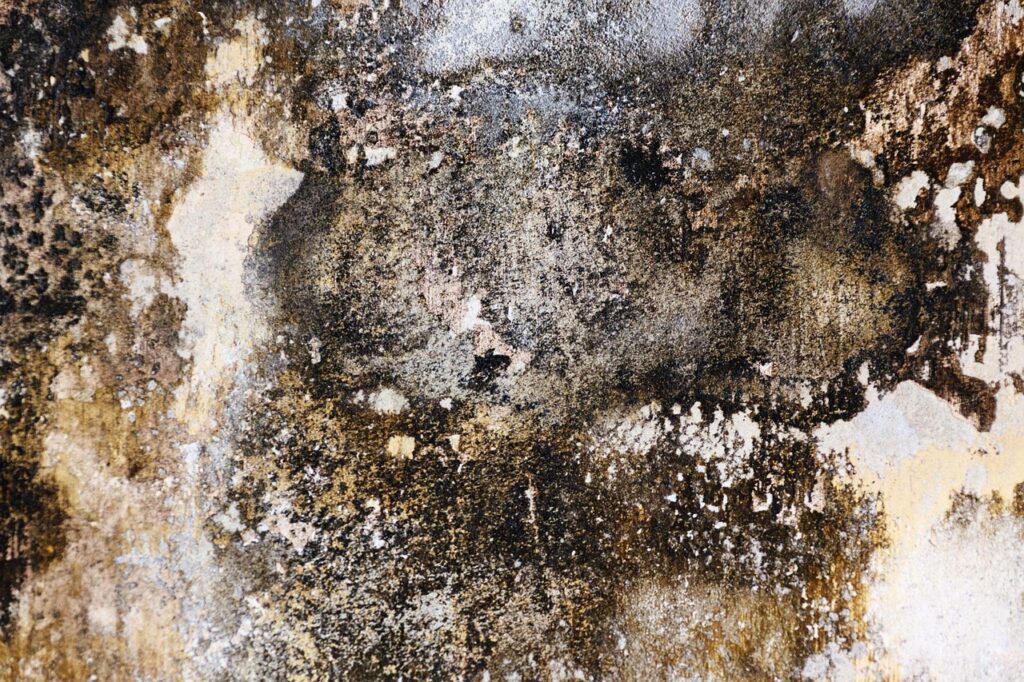
Mould needs moisture, a food source and time. Behind walls and under flooring, the moisture stays longer because it has no way to dry, and the materials, such as paper-faced drywall and wood, provide food. A leak in a wall cavity, condensation on a cold exterior wall, or a slow leak under a floor can keep the growth going for months without any visible sign.
That is why the inspection looks at the moisture first. A repair that does not address the moisture will not hold.
Is indoor air quality testing worth doing?
It can be, when the signs point to a problem or when people in the home have symptoms that may relate to the air. Air quality testing samples the air in the home and compares it with the outdoor air, so the result shows whether the indoor air carries more spores or fragments than it should.
- Useful after a leak, a flood or a visible mould problem.
- Useful before or after remediation, to confirm the result.
- Not a substitute for finding and fixing the moisture source.
What humidity level should my home be kept at?
Health Canada recommends keeping indoor relative humidity between 30 and 50 per cent to limit mould growth. A dehumidifier helps when condensation or humidity is above 50 per cent. The CAUT fact sheet on mould also recommends indoor humidity below 70 per cent, with 25 to 50 per cent as the best range.
How are inspection results used in a restoration?
The report is the starting point for the restoration scope. It names the source, the affected areas, the materials that can be kept and the materials that must come out, and it sets the readings the drying has to reach.
- The source is fixed before any repair is finished.
- Affected materials are listed, with photos and readings.
- The restoration scope is written from the report.
- A follow-up check confirms the result after drying.
See our mould remediation and restorations services.
What should I do before the inspection?
- Write down the signs. Where you see staining or smell mould, and when it started.
- Take dated photos. Of the stains, the damp areas and any leak.
- Note any symptoms. Who has them, and when they ease or return.
- Do not clean or paint over the area. That can hide the evidence the inspection needs.
- Keep higher-risk people away from the area. Infants, children, seniors, pregnant people and people with asthma or respiratory conditions.
Myths about mould inspections
Myth: If I cannot see mould, there is none.
Fact: Mould often grows behind walls and under floors. Moisture readings and targeted checks find it.
Myth: Bleach kills mould, so a clean wall is a safe wall.
Fact: Health Canada advises against using bleach to clean mould. Cleaning without fixing the moisture source is a common reason mould returns.
Myth: A quick air test settles everything.
Fact: Air tests show what is in the air at one time. The moisture source and the surfaces still need to be checked.
Ask for the report to be explained at the review visit. A good report tells you what was found, what it means for the home, and what can wait, so the decisions are yours and they are made with the evidence in front of you.
What does an insurance file need from an inspection?
An insurer or adjuster usually wants the report, the photos, the readings and the scope. A written report with dated evidence makes a claim faster and protects you if the scope changes.
- The written inspection report with dated photos.
- Moisture readings and any lab results.
- The restoration scope and the drying plan.
- Invoices and any approved changes.
Read your policy and ask your insurer for their written position. Coverage depends on the policy and the cause.
What does an inspection cost, and what does it include?
We do not publish a price on this page, because the cost depends on the size of the home, the number of areas to check and whether lab samples are needed. We confirm the scope and the price in writing at the booking, so there are no surprises when the report arrives.
When should I book a mould inspection in Toronto?
- You see or smell mould, or there is staining that comes back.
- There has been a leak, a flood, a sewer backup or condensation.
- Someone in the home has symptoms that ease when they are away from the house.
- You are buying or renovating an older home and want the moisture checked first.
Next step: book a site visit. We test, record and write up what we find, so you have the evidence before any repair is scoped.
Frequently asked questions
Can I test for mould myself?
Home test kits give limited information. A qualified inspection finds the source, tests where the signs point, and writes the results up for the repair scope.
How long does an inspection take?
It depends on the size of the home and how many areas need checking. We confirm the timing at the booking, and the written report follows the visit.
Do I need to move out during the inspection?
Usually not. Inspections are non-invasive, but if testing opens walls or floors, we plan access and tell you before any work.
Will the inspection cover the cause of the moisture?
Yes. The inspection looks for the source as well as the growth, because a repair that does not fix the moisture will not hold.
What if the report finds mould?
The report sets out the affected areas and the options. The restoration scope is written from it, and you approve the scope before any work starts.
Do you work in every Toronto area?
We work across Toronto and the Greater Toronto Area. We confirm the visit and the scope for each property.
Sources
- University of Toronto, Environmental Health and Safety, mould guidance: ehs.utoronto.ca/mould (24 to 48 hours).
- CAUT fact sheet on mould: bulletin-archives.caut.ca (humidity guidance; 48-hour response).
- Health Canada, mould guidance: humidity 30 to 50 per cent; avoid bleach; protective equipment; at-risk groups. Link to be confirmed by the owner before publishing.
Related services and guides
Targeted sampling, with the results written up.Air quality testing
Indoor air compared with outdoor air.Mould remediation
Containment, removal and clearance.
The Builders Plug
Call or text: (416) 639-1990
Email: info@thebuildersplug.ca
Hours: Monday to Friday 9am to 6pm, Saturday 10am to 4pm
Service area: Toronto and the Greater Toronto Area