
How this guide works
Painting looks like the last step, but the surface and the paint choice decide how long it lasts. Work through the ten decisions in order. Each one shows the options, what each does, and the pick we make when you ask us.
Decision 1
Where the paint goes: residential or commercial
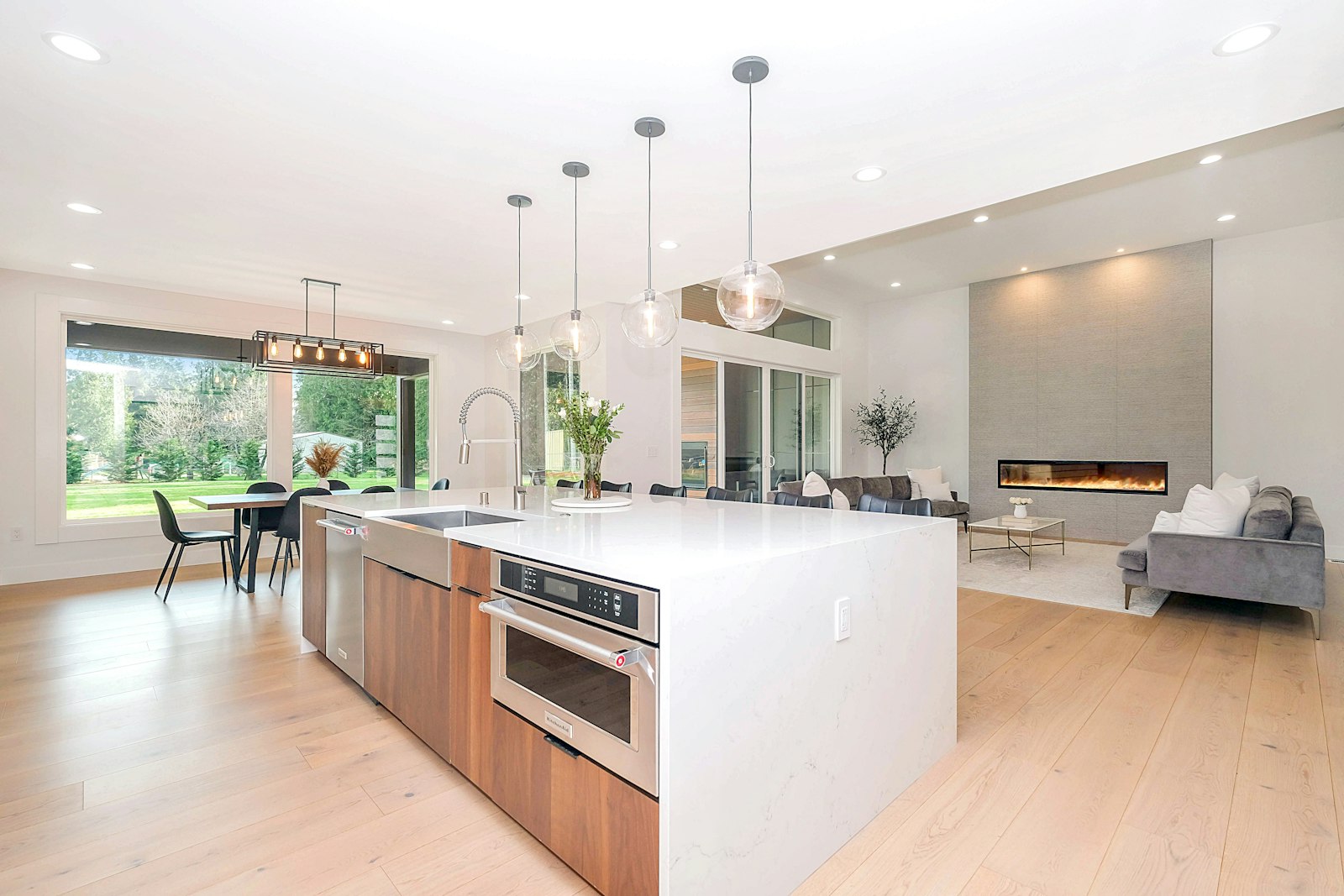
Paint is applied differently in a home than in an office, shop or restaurant. Residential rooms prioritise look and easy touch-ups. Commercial spaces need paint that stands up to cleaning, traffic and impact.
| Setting | What it needs | Typical choice |
|---|---|---|
| Living, dining and bedrooms | Good looks, easy touch-ups, a soft sheen | Low-VOC latex, eggshell or satin walls |
| Kitchens and bathrooms | Moisture, steam and cleaning | Satin or semi-gloss, mould-resistant paint |
| Hallways and entries | Scuffs, handprints, heavy traffic | Satin or washable eggshell, durable on corners |
| Offices | Clean, calm look and frequent wipe-down | Eggshell or satin, washable finish |
| Retail, restaurants, clinics | Frequent cleaning, impact, hygiene | Scrubbable commercial-grade paint, semi-gloss on high-wear areas |
Decision 2
Surface condition: the step that decides the result
Paint shows every flaw underneath. Cracks, nail pops, glossy patches, stains and moisture must be fixed first, or the paint fails early.
| Check | What it means | What fixes it |
|---|---|---|
| Cracks and nail pops | Movement or poor fastening under the surface | Patch, sand, re-fasten, then prime |
| Stains (water, smoke, marker) | Will bleed through a standard coat | Stain-blocking primer before the finish coats |
| Glossy or dusty surfaces | Paint will not bond | Clean, sand lightly, then prime |
| Moisture or mould | Paint over it will fail and the problem comes back | Fix the source first, treat the surface, then paint |
Decision 3
Paint type: latex, alkyd or a specialty paint
Most interior walls use water-based latex. Alkyd (oil-based) is harder to clean and dries slower, but it still has a place on some trim and high-wear surfaces. Specialty paints solve specific problems.
| Type | Strength | Trade-off |
|---|---|---|
| Latex (acrylic) | Low odour, fast drying, easy clean-up, good colour retention | Softer finish; choose a durable grade for high traffic |
| Alkyd (oil-based) | Hard, smooth, levels well on trim and doors | Longer dry time, strong odour, harder clean-up |
| Mould-resistant paint | Resists mould growth on damp-prone walls | Still needs the moisture source fixed |
| Scrubbable commercial paint | Repeated cleaning without losing the finish | Often higher sheen and fewer colour options |
Decision 4
Sheen: how shiny the finish is
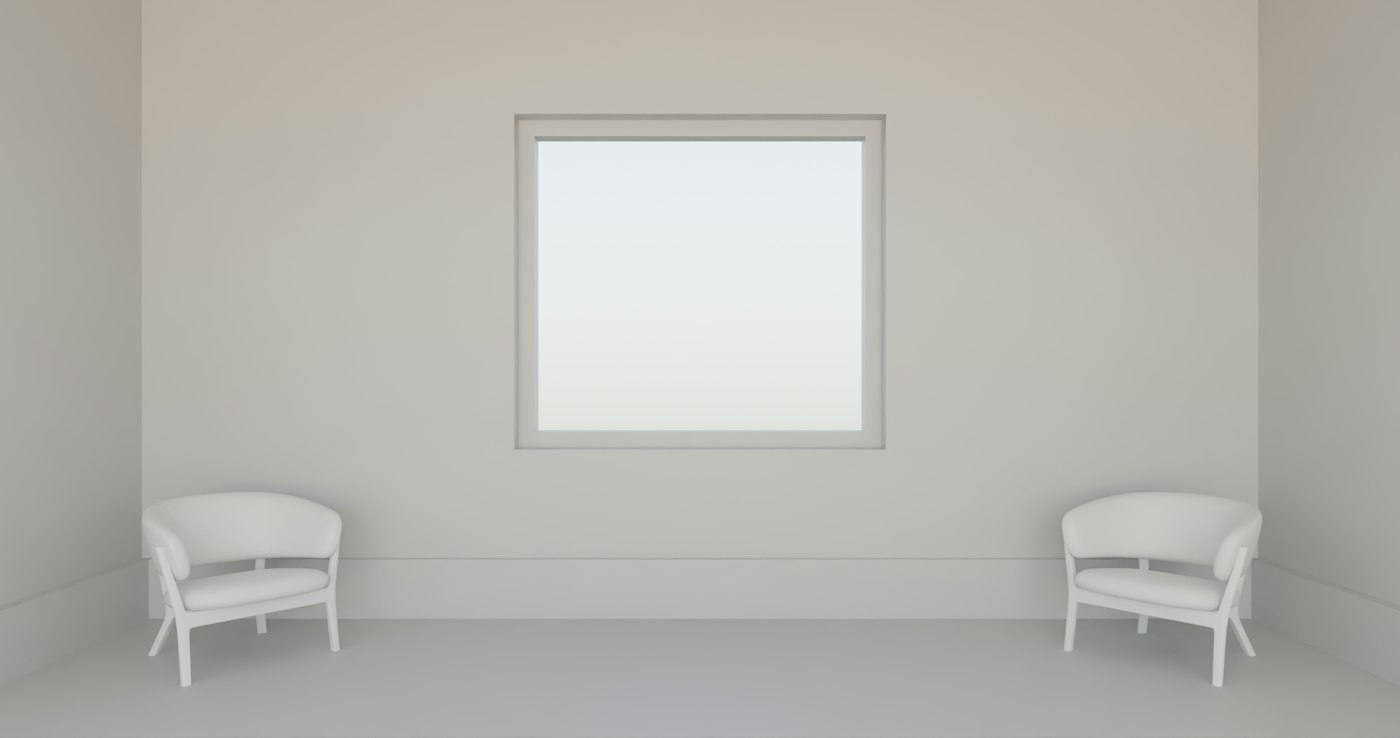
Sheen is the decision people underestimate. It changes how the wall looks in light, how well it hides flaws, and how easily it cleans.
| Sheen | Looks like | Cleaning | Best for |
|---|---|---|---|
| Flat or matte | Soft, velvet-like, hides flaws | Low; not for scrubbing | Ceilings and low-traffic bedrooms |
| Eggshell | Soft glow, a little sheen | Good; wipes clean | Living rooms, offices, hallways |
| Satin | Smooth, noticeable sheen | Very good; scrubs well | Kitchens, family rooms, high-traffic walls |
| Semi-gloss | Bright, crisp, reflects light | Excellent; scrubs hard | Trim, doors, bathrooms and kitchens |
| Gloss | Very shiny, shows every flaw | Excellent | Rarely used indoors |
Decision 5
Colour, undertone and light
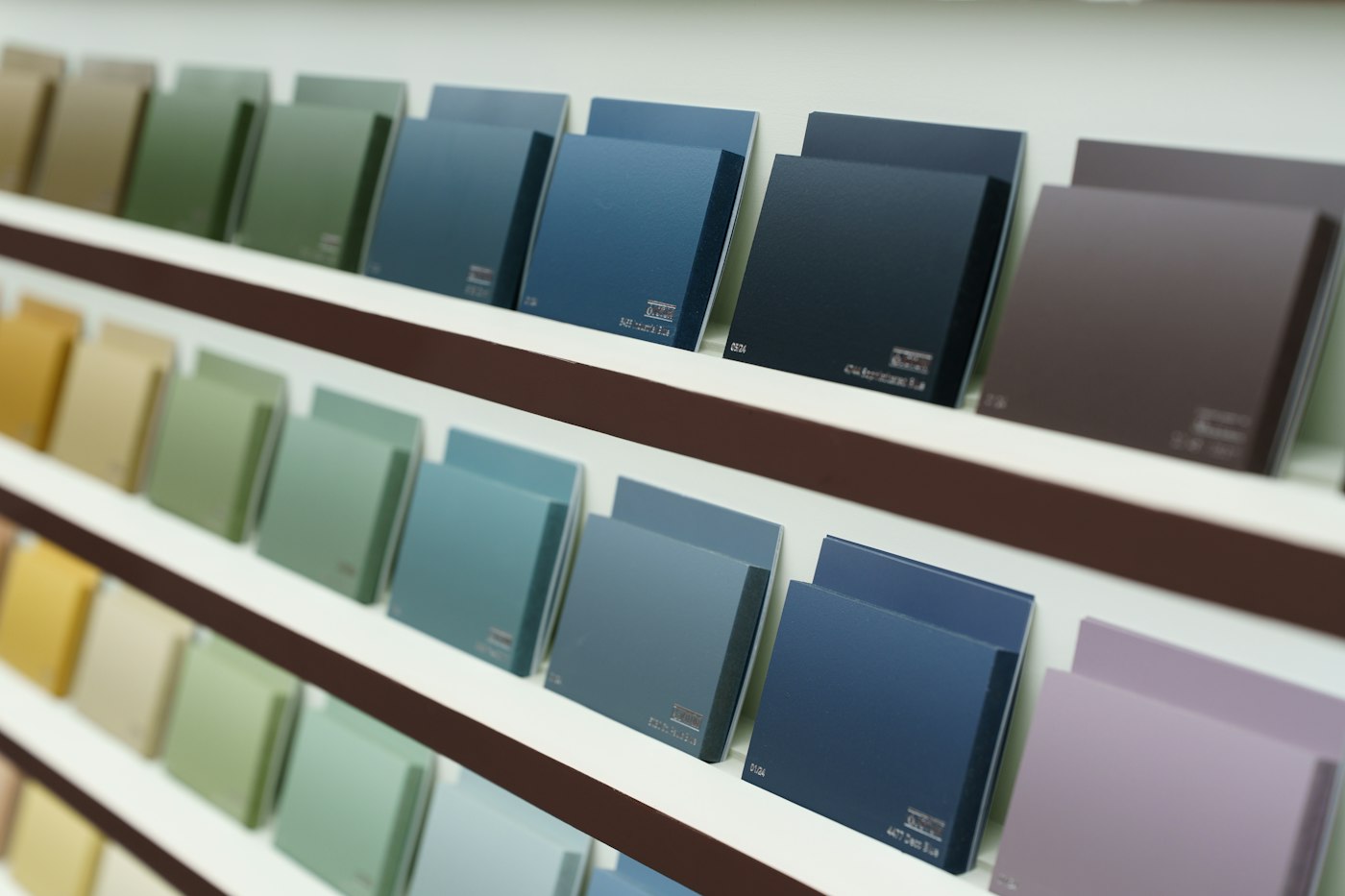
A colour looks different on a chip, on a wall, in the morning and at night. Undertone and the light in the room decide the result more than the name of the colour.
| Check | What to do | Why it matters |
|---|---|---|
| Test on the wall | Paint a sample board, at least 60 x 60 cm, on two walls | Colour changes across a room |
| Light direction | Look at the sample in morning, midday and evening light | North light is cooler; south light is warmer |
| Undertone | Compare warm (yellow, red) and cool (blue, grey) undertones | Undertones clash with floors and counters |
| Light reflectance (LRV) | Higher LRV reads brighter; lower reads deeper | Dark colours make small rooms feel smaller |
Decision 6
Ceilings, trim and doors
Ceilings, trim and doors are finished differently from walls. Each has its own paint and sheen, and each shows its own flaws.
| Surface | Paint | Sheen |
|---|---|---|
| Ceilings | Flat ceiling paint, low-spatter formula | Flat or matte |
| Trim and baseboards | Durable latex or alkyd-style trim enamel | Semi-gloss |
| Doors | Durable enamel or satin finish | Satin or semi-gloss |
| Feature walls | Same paint as the wall, or a deeper colour | Match the room sheen |
Decision 7
Primer and coats
A proper primer and the right number of coats decide the finish and how even the colour looks. Skipping primer is the most common reason paint fails.
| Step | What it does | When |
|---|---|---|
| Primer | Seals the surface, blocks stains, gives the top coat something to grip | On new drywall, patches, stains and colour changes |
| First finish coat | Builds the colour and sheen | On every wall and ceiling |
| Second finish coat | Evens the colour and gives full durability | On every surface, unless the paint says one coat |
| Touch-ups and inspection | Catch missed spots and edges before the room is handed back | At the end of every room |
Decision 8
Maintenance: how long paint lasts
Paint wears on a schedule that depends on the room, the sheen and how the space is used. A plan keeps the finish looking fresh without repainting the whole house.
| Room | What wears first | Typical refresh |
|---|---|---|
| Hallways and entries | Scuffs and handprints | Every few years, or spot-touch as needed |
| Kitchens | Grease, steam and cleaning | Every few years, with a durable sheen |
| Bathrooms | Steam and moisture | Every few years; watch for moisture |
| Bedrooms and living rooms | Light wear | Every several years |
| Commercial spaces | Traffic, cleaning and impact | Planned refresh schedule by area |
Decision 9
Finishes and feature details
Beyond the main colour, finishes and feature walls change the feel of a room. Use them with a plan, so the house holds together.
| Option | Effect | Use it when |
|---|---|---|
| Accent wall | A focal point in one colour | A bedroom, a living room, or behind a bed or sofa |
| Two-tone walls | Lower and upper colours divided by a line or trim | Dining rooms, stairwells, traditional rooms |
| Textured or limewash finish | Soft, layered look, hides imperfections | Character rooms and feature walls |
| Colour-drenched room | Walls, trim and ceiling in one colour | Small powder rooms and dens |
Quick check
Which paint plan fits your room?
2 or more ticked? Walls in a satin or washable eggshell, trim in semi-gloss, a stain-blocking primer on every repair, and a sample test before you commit. Book a free consult and we will write your paint plan for the room.
Talk to the Plug
Which paint is best for your room?
Tell us the room, the wear and the light. We will tell you the paint, the sheen and the colour to test, and we will check whether there are current offers for your area.
Haven't called the Plug yet?
Need to learn more?
Call, text, DM or get plugged in. Whichever way suits you, we take it from there.
Keep learning